
01
File version and event sequence.
L1 describes the integrity of a bound file version. L2 describes a verifiable sequence of recorded events. File binding and the event chain answer different questions: identical bytes do not automatically establish that the session produced those bytes.
02
Input signals in context.
L3 describes the temporal relationship between input signals and observed activity. Permissions and capture methods determine what is visible. Even physically typed text can be based on someone else’s source material.
03
Environment and hardware.
L4 requires evidenced controls over a defined environment. L5 also requires validated hardware attestation. Observed processes or a protected key are insufficient on their own. Each additional claim needs its own evidence and a verifiable basis for trust.
04
A profile, not a blanket seal of approval.
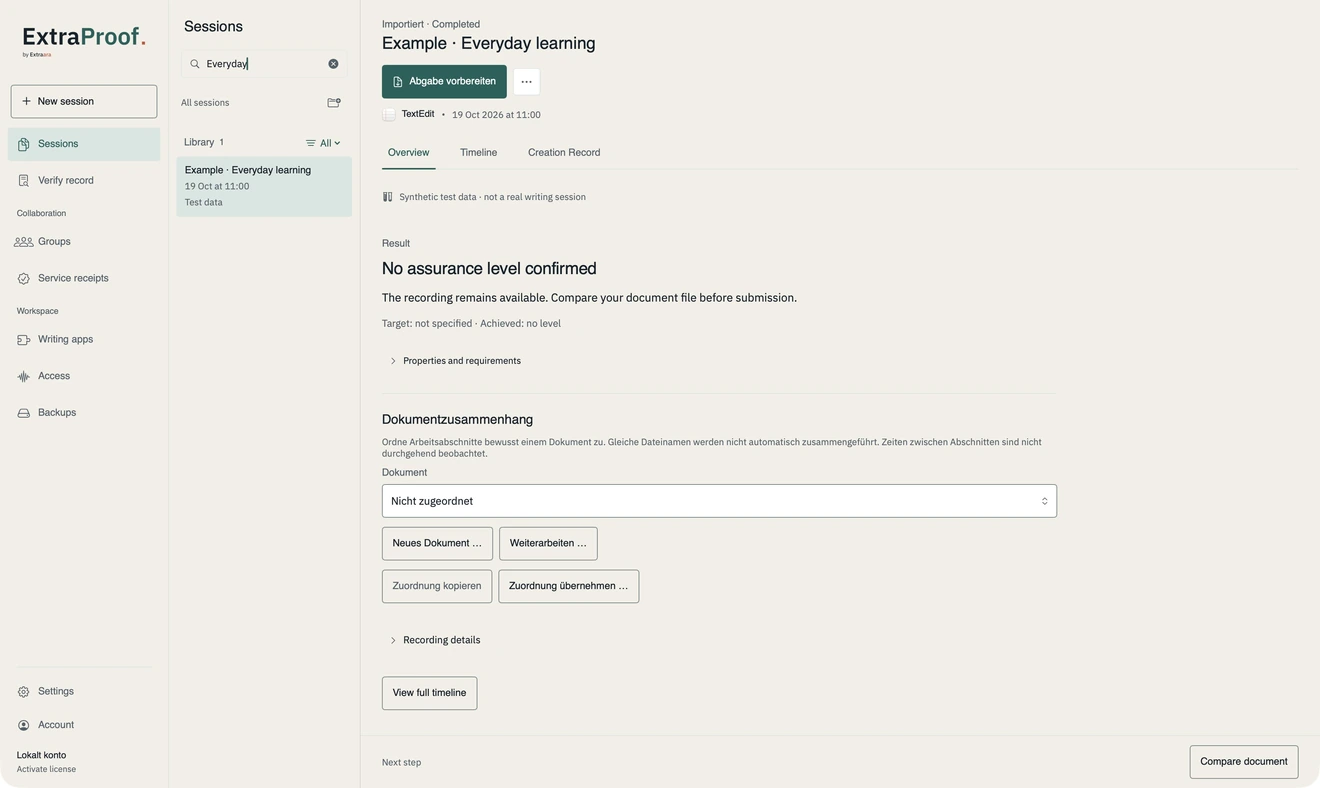
humanproof/1 confirms local recorder claims and does not automatically grant L1–L5 certification. Verification presents integrity, key trust and file comparison separately. The five categories help define precise requirements; they are not a score for freedom from AI assistance.
05
Requested and achieved are separate findings.
A record may only state the level actually achieved. A higher request cannot replace missing evidence. The verifier recomputes the requirements and reports discrepancies.